Put this provisional date in your diary for the next Wild Gestalt outdoor workshop.
13, 14 & 15 September 2008
More details to follow.
If you would like to be kept informed about the weekend please send me an email.
In brief, the weekend will consist of gentle hillwalking combined with Gestalt enquiry into the here and now. Emphasis is on awareness of yourself in relation to the group, the natural environment and your internal processes.
I look forward to hearing from you.
Regards
Paul
Paul
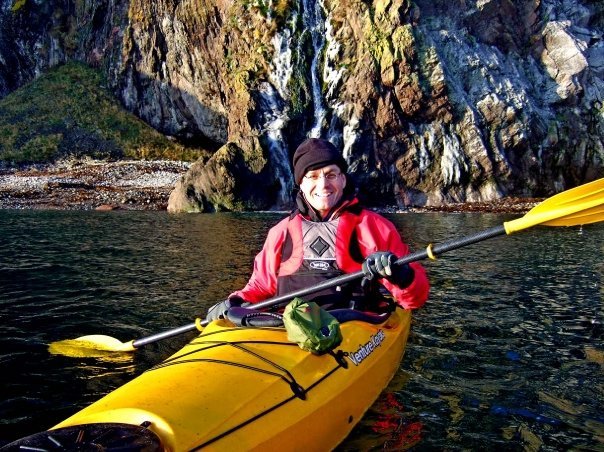
Winter Kayaking
Friday, June 13, 2008

Saturday, April 19, 2008

My recent trip to the hills of Snowdonia was a rich and meaningful experience. I was reminded what a fertile place a group can be for personal learning. And my belief has been reinforced that the natural environment provides a unique setting for this sort of work.
I have been trying to write something that explains what happens out there, what's different from working indoors, but this has proved difficult. When I've come up with words that do justice to the experience I will share them. Meanwhile, please add your thoughts on what it is about sitting on a wild Welsh hillside that stimulates heightened awareness of oneself and in relation to others and the broader world.
I found a quote that seems apt given that we experimented with silence and because I often bring back my feelings from wild places and enjoy them in the bustle of the city.
I have been trying to write something that explains what happens out there, what's different from working indoors, but this has proved difficult. When I've come up with words that do justice to the experience I will share them. Meanwhile, please add your thoughts on what it is about sitting on a wild Welsh hillside that stimulates heightened awareness of oneself and in relation to others and the broader world.
I found a quote that seems apt given that we experimented with silence and because I often bring back my feelings from wild places and enjoy them in the bustle of the city.
"Go Placidly
amid the noise and haste,
and remember what peace
there may be in silence"
(from Desiderata by Max Ehrman)
Take Care,
Paul
Sunday, April 13, 2008

Thursday, March 27, 2008
Going Wild in Devon
I recently had the great pleasure of working with a great group of people down in Devon. As part of a training workshop we spent a day exploring the possibilities of Wilderness therapy in a beautiful piece of woodland on the River Dart.
For most of the day I was able to shadow the facilitator and add my comments and observations when I felt I had something useful to contribute. I did, though, have the privilege of leading the group through an awareness exercise while sitting on the earth beneath the trees. I’ve led groups through such exercises before and have participated in similar exercises many times, but usually sitting on chairs in a stuffy, airless, centrally heated conference room, sitting. Climate control in the woods consists of zipping my coat higher and pulling my woolly hat lower!
As I talked the group through the exercise, I realised how much I enjoyed the richness of the experience. In a room I would be likely to concentrate on my thoughts, emotions, heartbeat, breathing, bodily sensations quite easily. I would be aware of my backside on the chair and my feet on the carpeted floor. I would hear perhaps the gurgling of the radiator (or someone’s stomach!) or the whirring of a fan. But out in the woods as I closed my eyes and talked the group through the exercise, I could feel the breeze on my cheek, the soil and leaves under my body, I could feel the earth with my fingers. And as we went deeper, I heard a woodpecker start up somewhere, not too far away, in the trees. I experienced this as a poignant and very special moment. Poignant because of the richness of the experience for me as a facilitator and special because it reaffirmed by belief in the potential of nature to enhance our awareness.
For me the awareness exercise will normally enhance my awareness of my whole self. When I participate in this exercise in a conference room I become more aware of how my body holds information about my emotions, how my feelings effect my physiological reactions and how much more my existence can be than just thoughts. This can be an affirming and sometimes quite a powerful experience. In the woods, I felt this whole awareness and I also felt this in relation to my surroundings in a way that I rarely, if ever, feel when I’m doing this work indoors.
The thing that I’ve found most interesting is that this more “holistic” awareness results in me being much more present. My feelings, thoughts and physical experience have become more integrated. Since I have been exploring this awareness in the outdoors, I have been much more able to integrate my experience of the world around me with my internal world. Is it a coincidence, I wonder, that I find myself looking up at the rooftops and upper floors of buildings when I walk through London, taking an interest in more than just the pavement and the gaps between the other pedestrians? Perhaps. Since I’ve been paying attention to myself and the natural environment I’ve been noticing much more about my relationship with urban environment.
For most of the day I was able to shadow the facilitator and add my comments and observations when I felt I had something useful to contribute. I did, though, have the privilege of leading the group through an awareness exercise while sitting on the earth beneath the trees. I’ve led groups through such exercises before and have participated in similar exercises many times, but usually sitting on chairs in a stuffy, airless, centrally heated conference room, sitting. Climate control in the woods consists of zipping my coat higher and pulling my woolly hat lower!
As I talked the group through the exercise, I realised how much I enjoyed the richness of the experience. In a room I would be likely to concentrate on my thoughts, emotions, heartbeat, breathing, bodily sensations quite easily. I would be aware of my backside on the chair and my feet on the carpeted floor. I would hear perhaps the gurgling of the radiator (or someone’s stomach!) or the whirring of a fan. But out in the woods as I closed my eyes and talked the group through the exercise, I could feel the breeze on my cheek, the soil and leaves under my body, I could feel the earth with my fingers. And as we went deeper, I heard a woodpecker start up somewhere, not too far away, in the trees. I experienced this as a poignant and very special moment. Poignant because of the richness of the experience for me as a facilitator and special because it reaffirmed by belief in the potential of nature to enhance our awareness.
For me the awareness exercise will normally enhance my awareness of my whole self. When I participate in this exercise in a conference room I become more aware of how my body holds information about my emotions, how my feelings effect my physiological reactions and how much more my existence can be than just thoughts. This can be an affirming and sometimes quite a powerful experience. In the woods, I felt this whole awareness and I also felt this in relation to my surroundings in a way that I rarely, if ever, feel when I’m doing this work indoors.
The thing that I’ve found most interesting is that this more “holistic” awareness results in me being much more present. My feelings, thoughts and physical experience have become more integrated. Since I have been exploring this awareness in the outdoors, I have been much more able to integrate my experience of the world around me with my internal world. Is it a coincidence, I wonder, that I find myself looking up at the rooftops and upper floors of buildings when I walk through London, taking an interest in more than just the pavement and the gaps between the other pedestrians? Perhaps. Since I’ve been paying attention to myself and the natural environment I’ve been noticing much more about my relationship with urban environment.
Saturday, February 16, 2008
Smell the Morning!
I was talking to Nick Ray recently about the African bush. It's something that we've both experienced close up and for extended periods. We agreed that after a while the whole feel and touch of the place really becomes ingrained, part of who we are. Then I said something that just slipped out naturally and seemed insignificant until Nick remarked on it. I was remembering what it was like to wake up in the bush after a night under the incredible stars of the African sky (something else I could go on about for hours!). I said something like, "...and waking up under a thorn tree and smelling the morning...". I was about to carry on but Nick smiled and stopped me.
I'd hadn't realised that just sitting there in my Wimbledon flat, I could smell the bush of northern Namibia. And how often do I smell the morning now? What do my mornings smell like now? The pleasant aroma of my morning coffee. The heavy industrial smell of diesel and petrol fumes as I stand at the bus stop. The rich smell of decaying vegetation on Wimbledon Common.
So this conversation, and memory, reminds me that there are many ways to experience the 'now'. Working holistically with clients I am often exploring their experience of the present including physical sensations, emotions, thoughts etc. But I've never considered the sense of smell. Perhaps it is not relevant in a stuffy winter counselling room. Yet, while working with clients in the Wilderness, it would seem like an ideal way of exploring the present. Another aspect of the vibrant, vivid now experience.
What do you smell in the morning?
I'd hadn't realised that just sitting there in my Wimbledon flat, I could smell the bush of northern Namibia. And how often do I smell the morning now? What do my mornings smell like now? The pleasant aroma of my morning coffee. The heavy industrial smell of diesel and petrol fumes as I stand at the bus stop. The rich smell of decaying vegetation on Wimbledon Common.
So this conversation, and memory, reminds me that there are many ways to experience the 'now'. Working holistically with clients I am often exploring their experience of the present including physical sensations, emotions, thoughts etc. But I've never considered the sense of smell. Perhaps it is not relevant in a stuffy winter counselling room. Yet, while working with clients in the Wilderness, it would seem like an ideal way of exploring the present. Another aspect of the vibrant, vivid now experience.
What do you smell in the morning?
Friday, February 1, 2008
Something About Gestalt
For those of you unfamiliar with what Gestalt therapy is, I thought I would write a few quick lines by way of introduction.
There were a few things that attracted me to this way of working. I like the emphasis on working in the here and now. While the past contributes to who you are today, I am much more interested in your experience in the present and what it is like during our meeting now, than I am in your past or your future. So as a gestalt therapist I want to find out about your past to contextualise and better understand our meeting in the present. According to Gestalt theory, the healing happens most effectively in the live, here and now relationship.
Awareness is the cornerstone of gestalt. Some writers say that awareness is the goal of gestalt therapy. We are often not aware of aspects of who we are. Sometimes I might have feelings that perplex me or cause me difficulty in my interactions with others and with the world. By becoming aware, in other words, by really understanding myself, getting to know myself and ultimately accepting who I am, I will be able to cope with my life much more effectively.
Gestalt uses what we call experiments to help raise our clients awareness. These experiments are used to give the client a different perspective on their experience of themselves in the here and now. Some therapists may make use of drawing, writing, sculpting etc which aid the client in their exploration and experience of themselves. Perhaps the most well known experiment is the "two chair" or "empty chair" experiment. This is where the client imagines another person or an aspect of themselves sitting in an empty chair in the room. This sounded strange to me when I first heard about it but I've discovered that it can be a very powerful way of getting in touch with aspects of the self that are out of awareness.
I should also say that I don't use experiments in every session, or even with every client. Much of the work is listening, letting the client be really heard, and trying to understand my client's experience.
Perhaps I need to bring the subject back to my relationship with the wilderness and the main purpose of this blog. Over the course of my life I have loved being in the outdoors whether it be on a mountainside, by a river, a lagoon, a beach or in a desert. I have noticed that when I am in these places I feel different. Somehow I feel freer, better, more able to see myself and my life. When I return to my urban life, my perspective seems to have shifted in some way. So I have become curious as to what happens when I am "out there".
My theory is that, much like the gestalt experiment, I am given a different view of my own life. Sometimes this may relate to having some "me" time to think through a problem. Some space, physically and psychically. As I read back over these last few lines I notice that I've said, "I am given...", when actually it may be more true to say that "I give myself", and maybe that is part of what feels so good about being out there.
The wilderness then, it seems to me, has the potential to be a wonderful place for a gestalt experiment! A place where people can experience themselves in a different way, get to know different aspects of themselves.
Stay tuned!
There were a few things that attracted me to this way of working. I like the emphasis on working in the here and now. While the past contributes to who you are today, I am much more interested in your experience in the present and what it is like during our meeting now, than I am in your past or your future. So as a gestalt therapist I want to find out about your past to contextualise and better understand our meeting in the present. According to Gestalt theory, the healing happens most effectively in the live, here and now relationship.
Awareness is the cornerstone of gestalt. Some writers say that awareness is the goal of gestalt therapy. We are often not aware of aspects of who we are. Sometimes I might have feelings that perplex me or cause me difficulty in my interactions with others and with the world. By becoming aware, in other words, by really understanding myself, getting to know myself and ultimately accepting who I am, I will be able to cope with my life much more effectively.
Gestalt uses what we call experiments to help raise our clients awareness. These experiments are used to give the client a different perspective on their experience of themselves in the here and now. Some therapists may make use of drawing, writing, sculpting etc which aid the client in their exploration and experience of themselves. Perhaps the most well known experiment is the "two chair" or "empty chair" experiment. This is where the client imagines another person or an aspect of themselves sitting in an empty chair in the room. This sounded strange to me when I first heard about it but I've discovered that it can be a very powerful way of getting in touch with aspects of the self that are out of awareness.
I should also say that I don't use experiments in every session, or even with every client. Much of the work is listening, letting the client be really heard, and trying to understand my client's experience.
Perhaps I need to bring the subject back to my relationship with the wilderness and the main purpose of this blog. Over the course of my life I have loved being in the outdoors whether it be on a mountainside, by a river, a lagoon, a beach or in a desert. I have noticed that when I am in these places I feel different. Somehow I feel freer, better, more able to see myself and my life. When I return to my urban life, my perspective seems to have shifted in some way. So I have become curious as to what happens when I am "out there".
My theory is that, much like the gestalt experiment, I am given a different view of my own life. Sometimes this may relate to having some "me" time to think through a problem. Some space, physically and psychically. As I read back over these last few lines I notice that I've said, "I am given...", when actually it may be more true to say that "I give myself", and maybe that is part of what feels so good about being out there.
The wilderness then, it seems to me, has the potential to be a wonderful place for a gestalt experiment! A place where people can experience themselves in a different way, get to know different aspects of themselves.
Stay tuned!
Subscribe to:
Posts (Atom)


